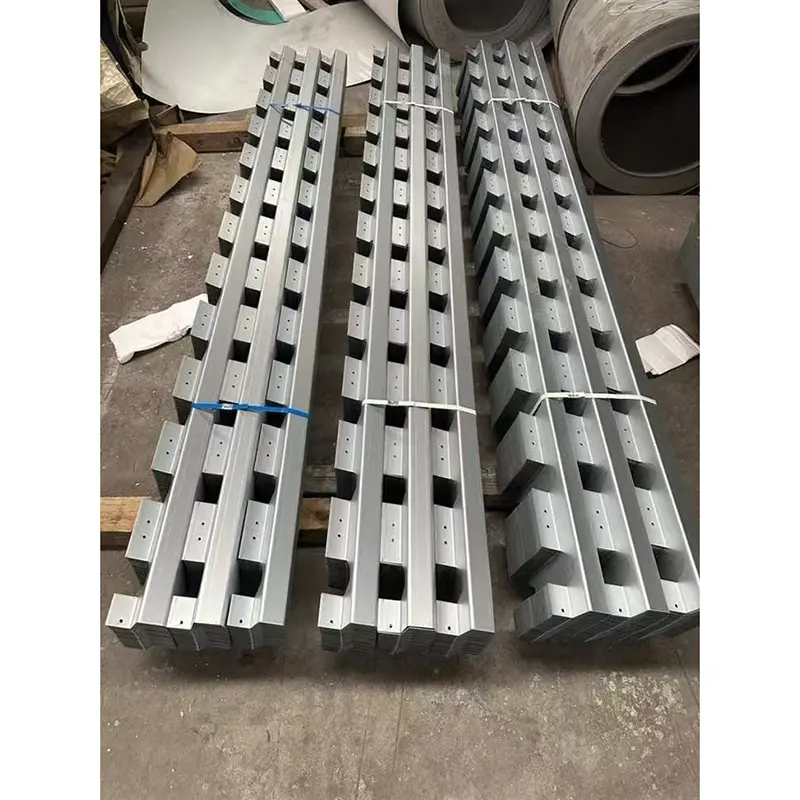

A guide rail is more than a simple metal track. It is a precision component responsible for maintaining controlled movement, alignment, stability, and safety in systems where smooth and repeatable motion matters. From elevator installations to industrial equipment, the right guide rail must combine dimensional accuracy, structural strength, surface quality, reliable installation, and long-term durability. This guide explains how guide rails work, what determines their performance, how to select the right specification, and what buyers should check before placing an order.
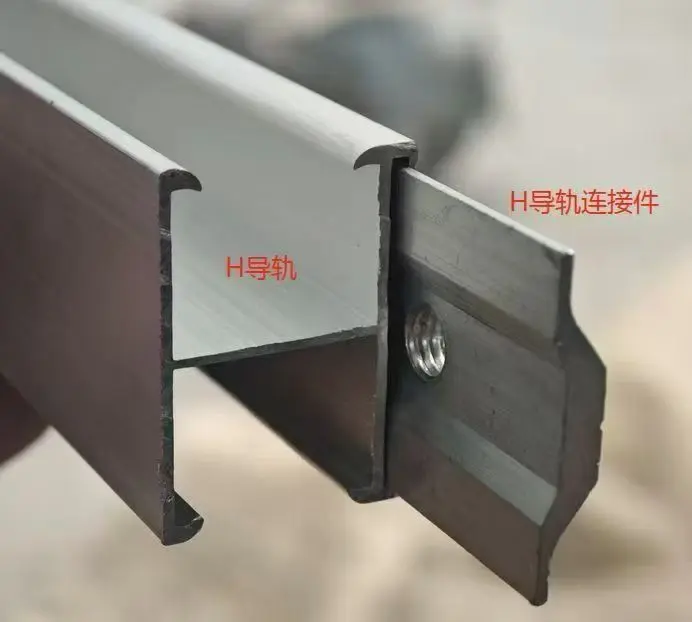
1. Guide Rail Basics
A guide rail is a rigid linear component designed to control the path of a moving part. Instead of allowing a component to move freely in several directions, the rail establishes a defined travel path and helps maintain consistent alignment throughout operation.
In elevator systems, guide rails are installed vertically inside the shaft to guide the elevator car and counterweight. Modern lift standards place specific requirements on guide rail material, dimensions, geometry, surface finish, connections, deflection, and structural performance. ISO 8100-33:2022, for example, specifies grades and quality, dimensional and geometrical tolerances, surface finish, and designation requirements for standardized T-type guide rails used for lift cars and counterweights.
For industrial machinery, the term can describe a wider range of linear guidance components. The exact cross-section, material, hardness, mounting method, and surface treatment depend on the machine and the operating environment.
2. How a Guide Rail Works
The performance of a guide rail comes from the interaction between the rail, the moving assembly, mounting brackets, guide shoes or rollers, joints, and the surrounding structure. Every element has to work together. A high-quality rail cannot compensate for poor installation, incorrect alignment, or unsuitable supporting hardware.
Maintaining a Controlled Travel Path
The rail provides a fixed reference surface. Guide shoes, rollers, wheels, or other guiding elements follow that surface, reducing unwanted movement and keeping the equipment aligned.
Handling Lateral Forces
Moving loads can create side forces during acceleration, deceleration, loading, unloading, vibration, or emergency stopping. A sufficiently rigid guide rail system helps resist these forces while limiting excessive deflection.
Supporting Smooth Operation
Rail straightness and surface condition directly influence the behavior of the moving component. Poor geometry, damaged surfaces, contamination, or improperly joined rail sections can increase noise, vibration, wear, and maintenance requirements.
For elevator applications, EN 81-20 specifically requires the guide rails, their joints, and attachments to withstand the loads and forces associated with safe operation, while deflections must remain sufficiently controlled to avoid interference with doors, safety devices, or moving components.
3. Major Guide Rail Applications
Guide rails are used wherever controlled linear or vertical movement is required. Although elevator guide rails are among the most recognizable examples, the underlying engineering principle applies to many industries.
| Application | Primary Function | Important Considerations |
|---|---|---|
| Passenger Elevators | Guide the car and counterweight | Alignment, ride comfort, strength, deflection, surface quality |
| Freight Elevators | Control movement under heavier loads | Load capacity, structural rigidity, durability |
| Industrial Equipment | Provide repeatable linear guidance | Load direction, speed, wear, mounting accuracy |
| Material Handling Systems | Guide moving platforms and components | Continuous operation, contamination, maintenance access |
| Automation Machinery | Maintain precise component positioning | Dimensional tolerance, surface finish, repeatability |
| Specialized Lifting Systems | Control vertical or inclined movement | Load conditions, safety requirements, environmental exposure |
In elevator installations, guide rails are not merely positioning components. They can also interact with safety systems during abnormal operating conditions. California elevator regulations, for example, require elevator cars and counterweights to be provided with guide rails and specify requirements concerning rail material, sections, supports, fastenings, and structural performance.
4. Materials and Manufacturing
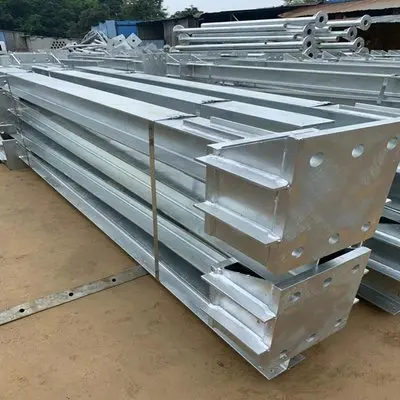
Steel is widely used for demanding guide rail applications because it offers a useful combination of strength, rigidity, machinability, wear resistance, and dimensional stability. However, simply specifying “steel” is not enough. The material grade and manufacturing process should match the actual application.
Cold-Drawn Guide Rails
Cold drawing can provide controlled dimensions and a consistent profile. This makes it suitable for applications where dimensional precision and surface characteristics are important.
Machined Guide Rails
Machining can be used when tighter geometric control or a particular surface condition is required. ISO 8100-33 identifies cold-drawn and machined manufacturing routes for standardized T-type elevator guide rails.
Surface Treatment
Depending on the environment, protection against corrosion may be necessary. Storage, transportation, installation, and long-term operating conditions should all be considered when determining whether additional surface protection is appropriate.
5. Key Performance Factors
Several technical characteristics determine whether a guide rail will perform reliably over its service life.
One of the most overlooked factors is the combined effect of rail deflection, bracket deflection, guide shoe clearance, and rail straightness. Elevator safety requirements explicitly recognize that these factors need to be considered together rather than independently.
6. Guide Rail Selection Guide
Selecting the correct guide rail begins with the application rather than the product catalog. A rail that works well in one system may be unsuitable for another because load, speed, rail spacing, support conditions, operating environment, and safety requirements can be very different.
Step 1: Define the Load
Determine the total moving mass and identify static, dynamic, impact, braking, and lateral loads. For elevator applications, car weight, rated load, counterweight configuration, speed, safety gear, and bracket spacing can all affect rail requirements.
Step 2: Confirm the Rail Profile
The cross-sectional shape must match the equipment and relevant specification. T-type guide rails are widely standardized for elevator applications, while industrial machinery may require customized profiles.
Step 3: Check Dimensional Requirements
Confirm rail height, width, thickness, length, mounting-hole arrangement where applicable, joint configuration, and permissible tolerances.
Step 4: Consider the Environment
- Indoor or outdoor installation
- Humidity and exposure to water
- Dust, chemicals, or industrial contaminants
- Temperature variation
- Storage duration before installation
- Required maintenance frequency
Step 5: Confirm Compatibility
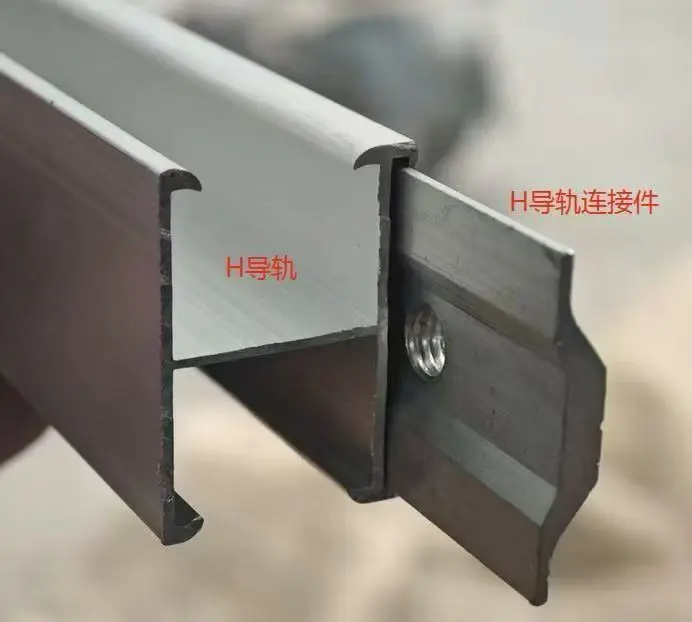
A guide rail should be evaluated as part of the complete system. Check compatibility with brackets, clips, fishplates, guide shoes, rollers, safety devices, and the supporting structure before finalizing the order.
| Buyer Question | Why It Matters |
|---|---|
| What load will the rail carry? | Determines required structural capacity and rigidity. |
| What is the operating speed? | Higher speeds can make alignment, vibration, and surface quality more critical. |
| What rail profile is required? | Ensures mechanical compatibility with the guiding system. |
| What tolerances are acceptable? | Controls installation accuracy and operational consistency. |
| Where will the rail be installed? | Helps determine corrosion protection and material requirements. |
| Which standard applies? | Prevents purchasing a technically incompatible product. |
7. Installation and Maintenance
Even a high-quality guide rail can perform poorly if installation accuracy is neglected. Rail alignment should be checked throughout the installation process rather than only after all sections have been assembled.
Installation Priorities
- Inspect rails before installation for visible damage, corrosion, deformation, or contamination.
- Verify the installation reference points and bracket positions.
- Maintain the specified alignment and spacing throughout the system.
- Ensure joints are properly fitted and secured.
- Check fasteners and supporting components according to the applicable specification.
- Perform final movement and alignment checks before commissioning.
Elevator requirements also recognize the importance of attachment flexibility and building movement. EN 81-20 requires guide rail fixing arrangements to accommodate effects such as normal building settlement or concrete shrinkage while preventing attachment rotation that could release the rails.
Routine Maintenance
Maintenance should focus on signs of wear, unusual vibration, corrosion, loose fasteners, damaged surfaces, abnormal noise, and changes in running behavior. If the application involves safety-critical equipment, inspections should follow the equipment manufacturer's instructions and applicable local requirements.
8. Quality Inspection Checklist
Buyers sourcing guide rails in volume should establish a clear inspection process before production begins. This reduces the risk of receiving components that technically match a nominal specification but create problems during installation.
- Material verification: Confirm the specified steel grade and relevant material documentation.
- Dimensional inspection: Check critical profile dimensions against approved drawings or specifications.
- Straightness inspection: Verify that rail geometry remains within the required tolerance.
- Surface inspection: Look for scratches, dents, cracks, corrosion, or other defects that could affect performance.
- Joint inspection: Check joint surfaces and connection components.
- Length verification: Confirm individual rail lengths and permitted tolerances.
- Packaging inspection: Make sure rails are protected against deformation and environmental damage during transportation.
9. Common Buyer Challenges
Challenge 1: Unclear Specifications
Buyers sometimes request a “standard guide rail” without defining the application, profile, material, length, tolerance, or applicable standard. This can result in repeated technical clarification and delayed production.
Challenge 2: Inconsistent Dimensions
In large projects, even small differences between batches can complicate installation. Consistent manufacturing controls are therefore important when multiple production lots are involved.
Challenge 3: Transportation Damage
Long steel sections can be exposed to bending, impact, moisture, and abrasion during transportation. Suitable packaging and loading methods are part of product quality, not an afterthought.
Challenge 4: Poor Communication Between Supplier and Installer
Technical details should be confirmed before production, especially when the rail is part of an integrated elevator or machinery system. Drawings, tolerances, material requirements, inspection criteria, and packaging expectations should be agreed in advance.
Challenge 5: Choosing on Price Alone
The lowest unit price may not represent the lowest total project cost. Rework, installation delays, replacement parts, transportation issues, and inconsistent quality can quickly outweigh an initial price difference.
10. Why Work with Guojian Steel (Tianjin) Co., Ltd.?
For buyers sourcing steel guide rails, the supplier's ability to understand technical requirements is just as important as manufacturing capacity. Guojian Steel (Tianjin) Co., Ltd. can serve as a technical manufacturing partner for buyers who need steel-based components with defined dimensions, consistent production requirements, and application-oriented support.
A professional sourcing process should begin with the actual application. Instead of treating every order as a generic steel product, the supplier and buyer can clarify the required profile, dimensions, material requirements, surface condition, length, tolerances, packaging, and inspection expectations before production.
For international buyers, the goal is not simply to purchase a length of steel. It is to obtain a guide rail solution that fits the application, installation method, quality requirements, and project schedule.
11. Frequently Asked Questions
What is a guide rail used for?
A guide rail controls the movement of a moving component along a defined path. In elevators, it guides the car and counterweight while helping maintain alignment and stability.
What material is commonly used for elevator guide rails?
Steel is commonly used because it provides the strength and rigidity required for demanding applications. Specific material requirements depend on the applicable standard and system design.
What makes a guide rail high quality?
Important characteristics include appropriate material properties, dimensional accuracy, straightness, suitable surface finish, consistent geometry, reliable joints, and proper inspection.
Why is guide rail straightness important?
Excessive deviation can affect the interaction between the rail and guide components, potentially increasing vibration, noise, wear, and installation difficulty.
How should buyers choose a guide rail?
Start with the application, load, speed, rail profile, dimensions, tolerances, installation arrangement, operating environment, and applicable standards. The complete guiding system should be considered rather than the rail alone.
Are guide rails standardized?
Some applications use standardized profiles and requirements. For elevator systems, ISO 8100-33:2022 specifies requirements for standardized T-type guide rails used for lift cars and counterweights. Other industrial applications may require application-specific designs.
Can guide rails be customized?
Depending on the manufacturing process and application, requirements such as dimensions, lengths, material grades, surface condition, hole arrangements, packaging, and other production details may be customized or agreed according to project specifications.
Why should guide rails be inspected before shipment?
12. Conclusion
A reliable guide rail is the result of more than a suitable steel profile. Its real performance depends on the relationship between material quality, geometry, straightness, surface condition, structural strength, joints, installation accuracy, and the operating environment.
For elevators and other precision movement systems, these factors become particularly important because guide rails directly influence alignment, ride quality, equipment stability, maintenance requirements, and safe operation. International standards such as ISO 8100-33 provide defined requirements for standardized elevator guide rails, while local regulations may establish additional requirements for specific installations.
For buyers, the most effective approach is to define the application clearly, confirm technical specifications before production, evaluate the complete guiding system, and work with a manufacturer capable of maintaining consistent quality from raw material through final inspection.
Looking for a Reliable Guide Rail Manufacturing Partner?
If you are sourcing guide rails for elevators, industrial equipment, or other steel-based applications, Guojian Steel (Tianjin) Co., Ltd. can discuss your technical requirements and help identify a suitable manufacturing solution. Share your drawings, dimensions, material requirements, quantity, and application details to begin the discussion. Contact Us.