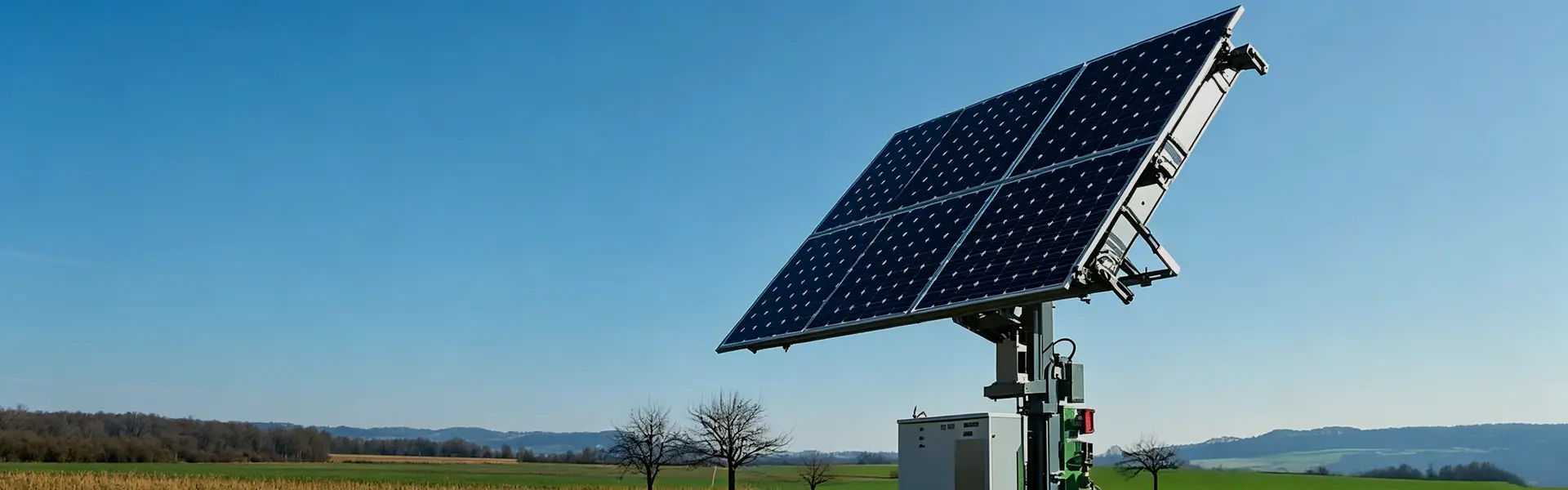
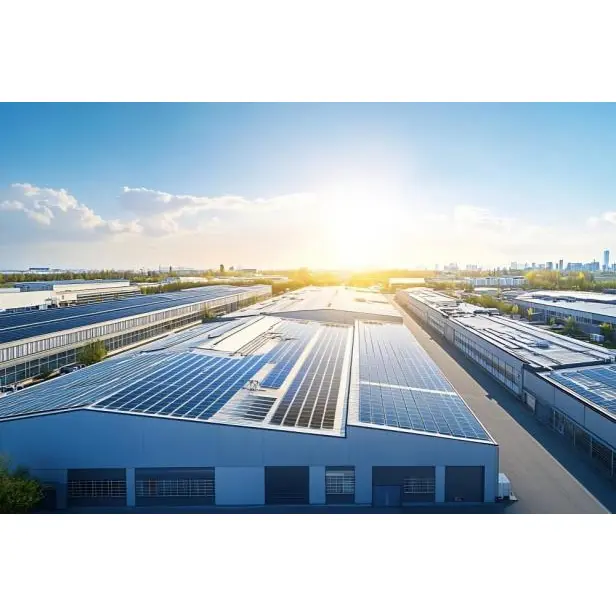
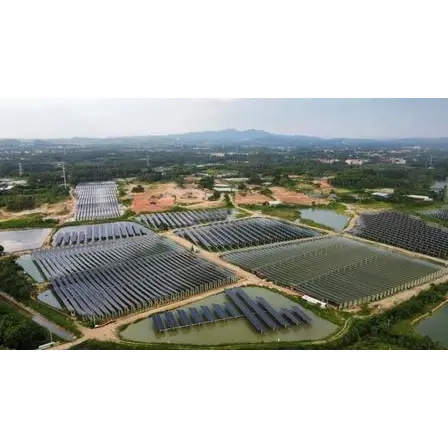
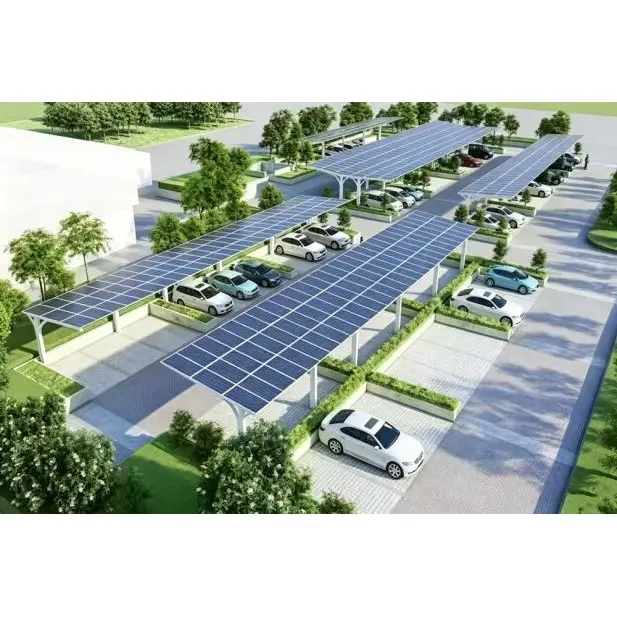
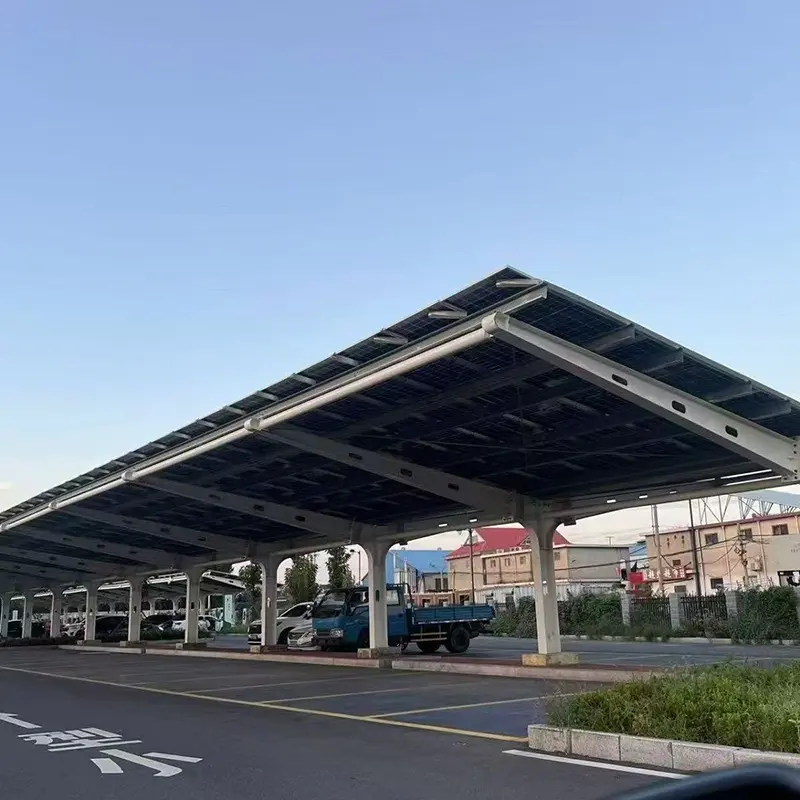
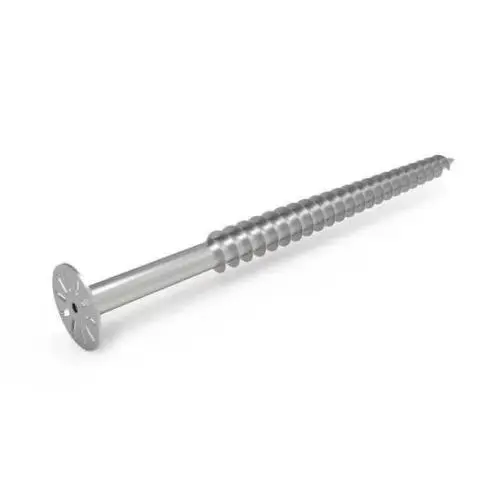
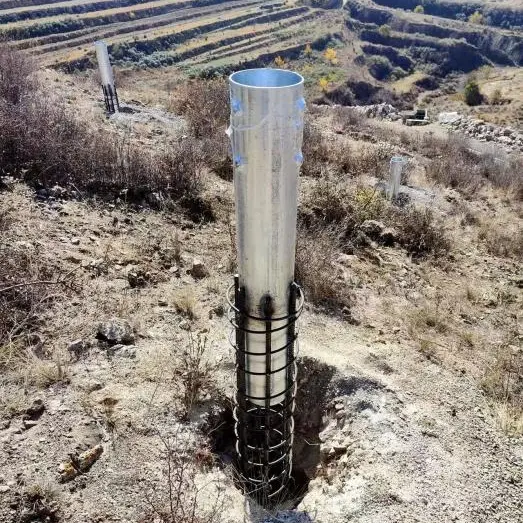
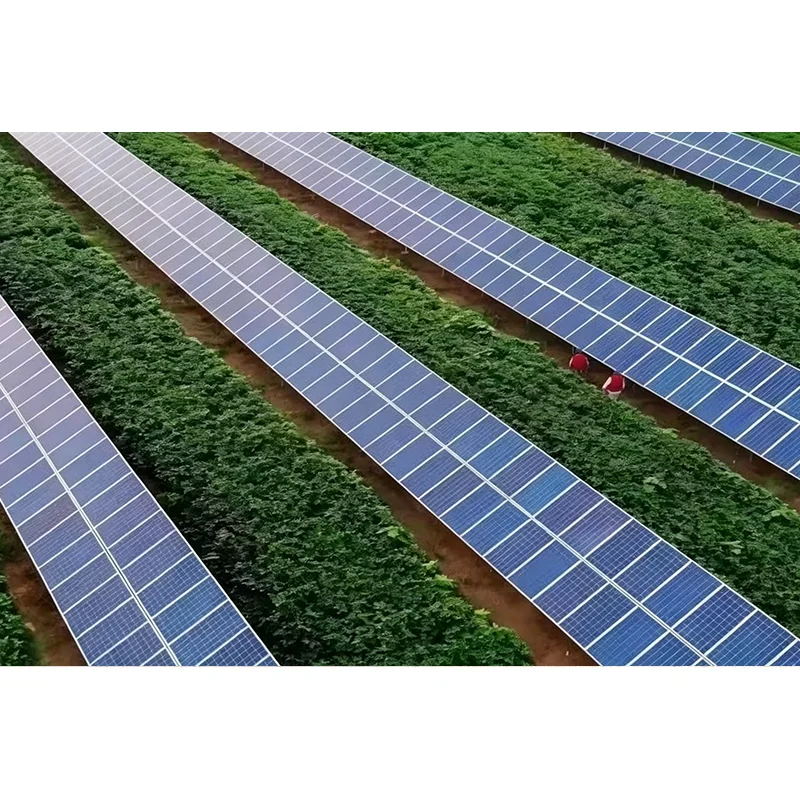
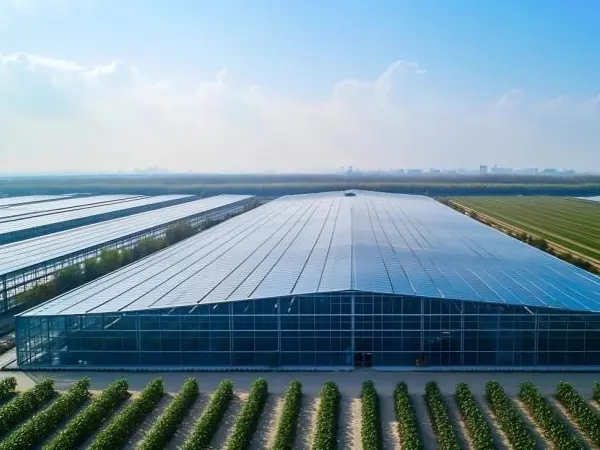
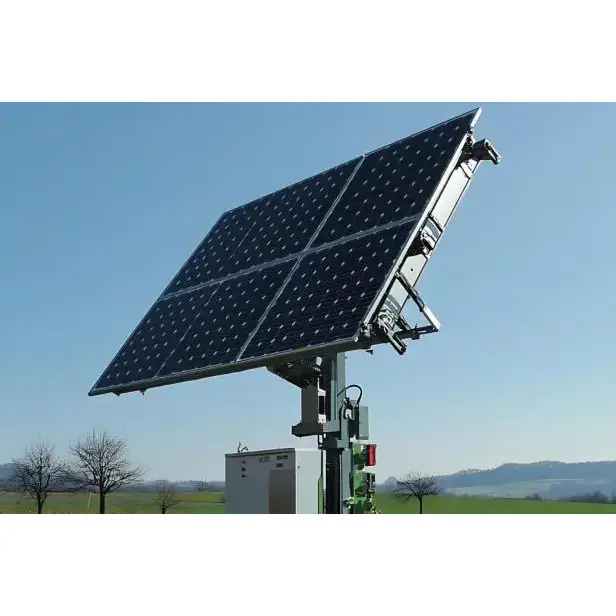
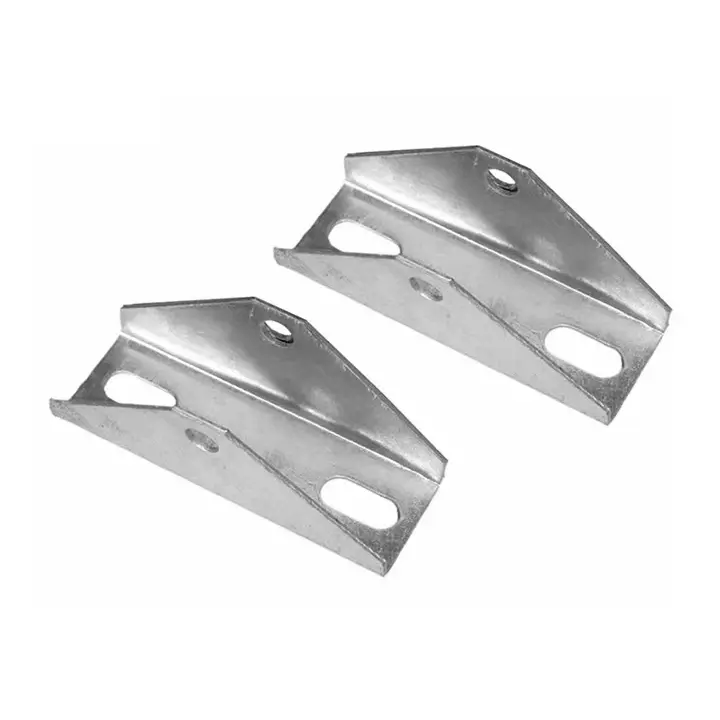
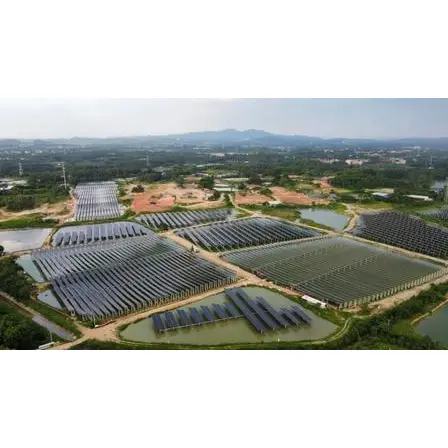
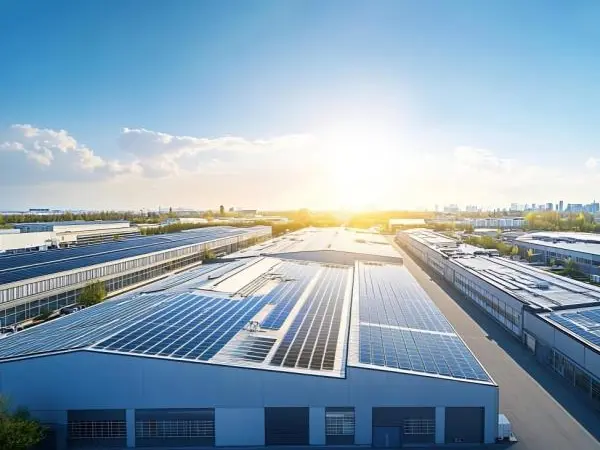
Guojian Suppliers focus on the production of underground components for photovoltaic systems. They undertake the bulk procurement of photovoltaic spiral ground anchors and project-specific customization. The photovoltaic spiral ground anchors, as invisible underground foundations, replace traditional concrete bases. They are used in situations such as riverbank silt, rocky wastelands, and backfill soil, avoiding the hassle of pouring concrete, curing, and dismantling. They are widely used in agricultural photovoltaic, fishery photovoltaic, ground distributed, and photovoltaic car shelter projects. Many projects have well-designed ground supports above ground, but they overlook the differences in the working conditions of the underground ground anchors. Later, problems such as settlement, deviation, and insufficient uplift resistance may occur, leading to hidden faults. We produce spiral ground anchors based on domestic geological practical experience. Standard specifications are in stock, with a delivery period of 12-18 working days. Third-party testing reports can be provided to meet project approval and acceptance requirements. Our Ground Pile series includes products such as Ground Screw Anchor, etc.
What is it?
What is visible in a photovoltaic power station is the components and supports. What truly holds all the weight is the spiral ground anchors buried underground. It remains buried in the soil all year round, in contact with groundwater, saline soil, and humus soil. Once corrosion, subsidence, or insufficient uplift resistance occur, the entire ground support system will tilt and deform.
Unlike the components on the ground that can be inspected and maintained at any time, ground anchors are buried in the soil and it is difficult to detect problems in a timely manner. When the supports are obviously offset, it often means irreversible losses have already occurred. Many ground anchors on the market only consider the pipe diameter and blade size in the drawings, ignoring the actual impact of soil acidity, alkalinity, and groundwater level in different regions. Our spiral ground anchor products are based on the geological feedback from different construction sites across the country, rather than just the drawing parameters.
What are the engineering missions of ground anchors
A photovoltaic spiral ground anchor is not just a pipe with a blade. It also withstands downward pressure, upward uplift force, and horizontal shear force.
When strong winds hit, the photovoltaic components will generate a huge uplift force. The ground anchor relies on the blade's bite with the soil to hold the entire support system from being lifted. Under the weight of accumulated snow, the ground anchor needs to disperse the load to the deep and stable soil layer to prevent overall subsidence. In lateral wind conditions, it tests the shear resistance of the pile body to prevent the pile from tilting.
Concrete foundations can achieve stability through self-weight; the spiral ground anchor relies entirely on the bite of the blade and the surrounding soil. The same ground anchor buried in clay, sand, or backfill soil can have a huge difference in uplift and compression resistance. The theoretical bearing capacity on the drawings may be directly discounted in the actual construction site, which is the root cause of the inconsistency between the preliminary calculation and the on-site measurement results in many projects.
Failure case review from project sites
We have sorted out the failure cases of ground anchors encountered in past cooperation projects to optimize the product structure in reverse. This is also an important reference for us to make products.
Hot-dip galvanizing process: Key details for underground corrosion prevention
The majority of the life cycle of a ground anchor is buried in the soil. The corrosion prevention process directly determines the service life.
There are several treatment methods in the market: cold galvanizing, painting and brushing zinc, and overall hot-dip galvanizing. Cold galvanizing is only a thin layer of coating on the surface, which is easily damaged by friction with the soil layer and stone scratches. Groundwater will quickly start to corrode the steel pipe from the damaged point.
We adopt the overall hot-dip galvanizing process, where the steel pipe and the spiral blade are all immersed in zinc. The weld seam position also forms a zinc coating, without leaving a bare weld corrosion point. Many small factories weld the steel pipe and the blade together and then simply brush zinc on the surface, leaving the weld seam position as a corrosion breakthrough point.
Hot-dip galvanizing is not about the thicker the zinc layer, the better. Excessive thick zinc layer is prone to peeling and falling off. We control the zinc coating thickness within the range of 85-120 μm, balancing the adhesion of the coating and the resistance to soil corrosion. The steel pipe is selected as Q235B hot-rolled pipe material, and the actual wall thickness is strictly controlled, refusing thin-walled pipe materials with falsely marked wall thickness.
Site protection and shipping protection
The spiral pile is a heavy steel structure component. During transportation and hoisting, if it is bumped, the local galvanized coating may be scraped off. If no treatment is carried out, the bumped areas will be prone to rusting after being buried.
When we deliver the products, a protective guard ring is placed around the connection flange at the pile head to prevent the flange hole from being bumped during hoisting; simple protective films are made for key parts of the pile body. The entire shipment is isolated using steel truss frames to avoid direct stacking and friction between piles.
Each batch of goods comes with accompanying delivery documents: material list, galvanization test report. The packing list is classified by specifications to facilitate the site personnel to count the number of piles of different lengths and blade specifications, avoiding confusion and incorrect use of materials on site.
Project implementation support
We not only provide finished pile products, but also offer collaboration from the project's early stage to the construction stage.
1. Geological data assessment: The client provides a geological report, and we combine soil layer parameters to give reference opinions on pile length and blade form. We do not make absolute commitments and remind that on-site trial-piling verification is necessary;
2. Sample and trial-pile support: For new projects, small batches of goods can be supplied for on-site trial-piling. After obtaining actual uplift data, the specifications of the large batch can be determined;
3. Non-standard modification: For special sites, the pile length, blade outer diameter, and flange opening size can be adjusted to adapt to the client's existing supports;
4. Construction consultation: During the pile driving process, if there are difficulties in screwing in or abnormal torque, remote assistance can be provided for analysis, and adjustment suggestions can be given.
FAQ
Q1: How long can the hot-dip galvanized ground anchors remain rust-free when buried in the soil?
A: The actual lifespan largely depends on the soil's acidity and alkalinity, as well as the groundwater level. In neutral ordinary soil, hot-dip galvanized ground anchors can meet the 25-year project period for photovoltaic systems; in saline-alkali highly corrosive soil, an additional anti-corrosion plan is required, and it cannot be generalized or simply guaranteed that all conditions will have no rust for 25 years.
Q2: Can the ground anchor specifications be determined directly without a geotechnical report?
A: Experience reference specifications can be provided, but it is strongly recommended to conduct a trial-pile test after the site is accessed. Without a geotechnical report, theoretical data and the actual soil layer may have deviations, and the trial-pile test is the most direct means to verify the bearing capacity.
Q3: Can the ground anchors still be used if the blades slightly hit stones during the driving process?
A: Minor scratches and knocks on the coating can be repaired with zinc paint on site; if the blades are curled, torn, or the bonding area is damaged, it is recommended to directly scrap them and do not force them into the ground.
Q4: Can the ground anchor flanges be modified according to the flange hole positions on my side's support?
A: Customization of flange hole opening is supported. A flange drawing or physical dimensions need to be provided, and there is a corresponding minimum order quantity.
Q5: Can standard ground anchors be used directly on the backfilled soil site?
A: The backfilled soil mainly depends on the compaction degree; loose backfilled soil requires an extended pile body and penetration into the underlying original soil layer. Staying only in the backfill layer is difficult to meet the uplift resistance requirements.