News

What Makes a Tilted Single-Axis Solar Tracker System Effective for Modern PV Projects?

2026-09-17 0 Leave me a message

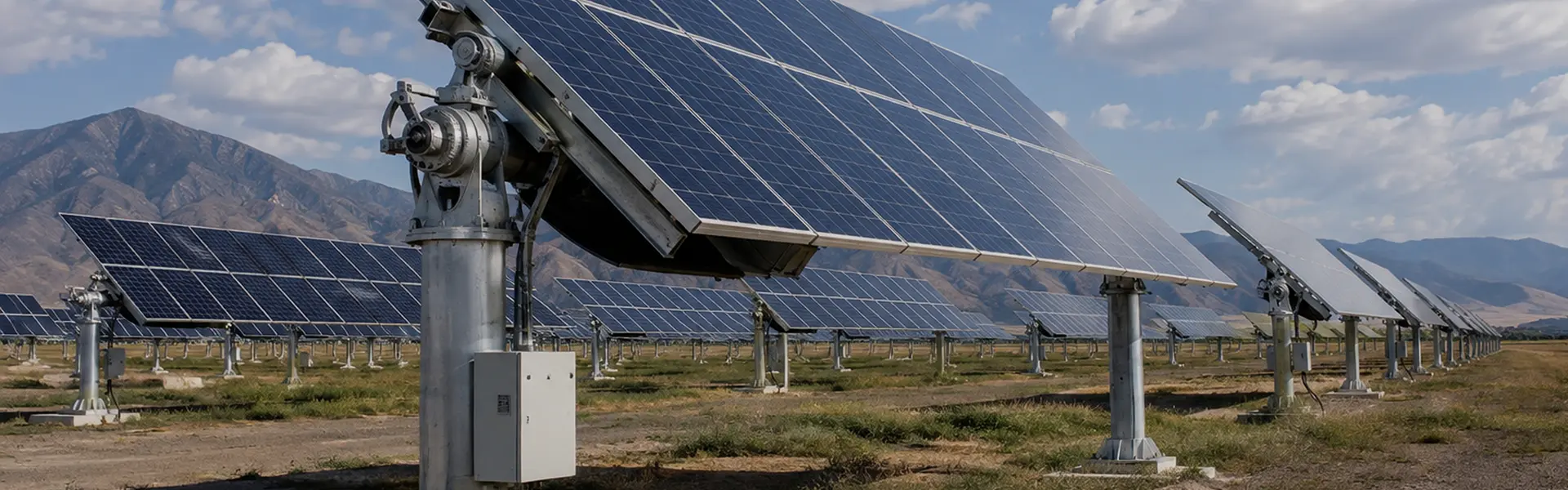
A Tilted Single-Axis Solar Tracker System allows photovoltaic modules to rotate around a single inclined axis, helping maintain a more favorable angle toward the sun throughout the day. Compared with fixed-tilt mounting, this approach can increase solar irradiation received by the modules while retaining a simpler mechanical architecture than dual-axis tracking. This article explains how tilted-axis tracking works, what project challenges it addresses, how system components affect performance, and what engineers and project developers should consider when planning a reliable tracking solution. It also examines installation conditions, structural design, control strategies, maintenance, energy yield, and long-term project value.


Table of Contents

  1. Introduction: Why Solar Tracking Matters
  2. What Is a Tilted Single-Axis Solar Tracker System?
  3. How the Tracking Structure Works
  4. Key Components of the System
  5. Major Benefits for PV Projects
  6. Project Challenges the System Can Address
  7. Tilted Tracking Compared with Fixed-Tilt Systems
  8. Important Design Considerations
  9. Typical Applications
  10. Maintenance and Long-Term Reliability
  11. Project Evaluation Checklist
  12. Frequently Asked Questions
  13. Conclusion

Introduction: Why Solar Tracking Matters

Solar photovoltaic modules generate electricity by converting sunlight into electrical energy. However, the amount of useful solar radiation reaching a module changes continuously as the sun moves across the sky. A fixed-tilt PV structure maintains one predetermined orientation, which means its angle relative to the sun is only optimal during certain periods.

This creates a practical challenge for developers who want to increase energy production without introducing the complexity of a fully dual-axis tracking system. A Tilted Single-Axis Solar Tracker System addresses this gap by allowing the PV array to rotate around one inclined axis.

Single-axis tracking is already widely used in photovoltaic applications, particularly in larger solar installations. Research has shown that single-axis systems can provide meaningful energy gains compared with fixed-tilt systems, although the actual gain depends strongly on latitude, weather, system geometry, shading, and operating conditions. :contentReference[oaicite:0]{index=0}

The tilted-axis configuration adds another design variable: the rotation axis is inclined rather than being completely horizontal or vertical. This geometry can be particularly useful when the project site, latitude, terrain, and desired solar trajectory make an inclined axis advantageous.


What Is a Tilted Single-Axis Solar Tracker System?

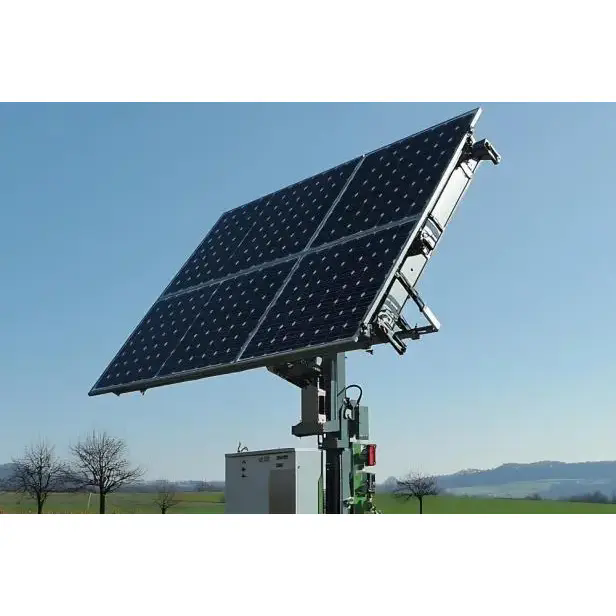
A Tilted Single-Axis Solar Tracker System is a photovoltaic mounting structure in which solar modules rotate around one axis that is installed at an angle relative to the horizontal ground surface.

Unlike a fixed PV mounting structure, the modules are not permanently locked into one orientation. A motorized drive mechanism changes their angular position during the day according to a tracking strategy. Unlike a dual-axis tracker, however, the system uses only one rotational degree of freedom.

Technical literature generally describes a tilted single-axis tracker as a system whose rotation axis lies between horizontal and vertical. The axis inclination can be selected according to the geographic location, solar geometry, structural requirements, and project objectives. :contentReference[oaicite:1]{index=1}

The basic concept can be summarized as:

  • One rotational axis: The PV array follows the sun using a single mechanical movement.
  • Inclined axis: The rotation axis is positioned at a predetermined angle rather than remaining completely horizontal.
  • Automated movement: A controller determines or receives the required tracking position.
  • Continuous adjustment: The array changes its orientation throughout the operating period.
  • Structural integration: The tracker combines foundations, support structures, drive components, modules, and control equipment.

How the Tracking Structure Works

The operating principle is straightforward: the tracker changes the orientation of the PV array so that the modules receive sunlight at a more favorable angle during different times of the day.

A typical system begins with a structural axis supported by foundations and bearing assemblies. PV modules are mounted onto a torque tube or equivalent structural beam. A motor and transmission mechanism then rotate the array around the inclined axis.

The controller can use programmed solar-position calculations, time information, geographic coordinates, sensors, or a combination of these inputs. The tracking strategy then determines the appropriate position for the array.

Research into tilted-axis tracking has demonstrated that optimized rotation around an inclined axis can improve energy extraction compared with certain alternative tracking approaches, particularly under specific latitude and weather conditions. :contentReference[oaicite:2]{index=2}

However, tracking should not be viewed as a universal percentage increase. The actual energy benefit depends on the complete project environment. A well-designed tracker must consider the sun path, terrain, module configuration, row spacing, shading, wind conditions, and operating strategy.


Key Components of the System

A reliable Tilted Single-Axis Solar Tracker System is more than a rotating frame. Mechanical, electrical, structural, and control elements must work together.

Component Primary Function Key Consideration
Support Structure Supports the PV modules and distributes structural loads Strength, stiffness, corrosion resistance
Inclined Axis Defines the rotational geometry Axis angle, alignment, rigidity
Drive Motor Provides rotational movement Torque, reliability, power consumption
Gearbox or Slewing Drive Transfers motor force to the structure Load capacity and mechanical durability
Controller Calculates and manages tracking positions Accuracy, communication, control logic
Position Feedback Confirms the actual array position Accuracy and fault detection
Foundation Transfers structural loads to the ground Soil conditions, loads, installation method
Safety System Protects the tracker during abnormal conditions Wind protection, limits, emergency control

Major Benefits for PV Projects

Improved Solar Collection

The most important reason to install tracking technology is to improve the relationship between the module surface and incoming sunlight. By moving during the day, the array can capture more direct solar radiation than a stationary structure under suitable conditions.

Experimental research on tilted single-axis tracking has reported measurable energy gains compared with fixed systems, while also showing that performance varies considerably with weather conditions. :contentReference[oaicite:3]{index=3}

Balanced Mechanical Complexity

A dual-axis tracker can follow the sun in two dimensions, but this requires additional mechanical movement, controls, and components. A single-axis tracker provides one degree of movement, creating a potentially simpler mechanical architecture.

This balance between additional energy capture and mechanical complexity makes single-axis tracking attractive for many larger PV projects.

Better Adaptability to Site Conditions

An inclined rotation axis can be configured according to project geometry. This can be valuable for sites where a conventional horizontal tracking arrangement is not the most suitable solution.

For projects involving sloped or complicated terrain, structural design becomes particularly important. The tracker must be engineered around actual site conditions rather than simply applying a standard configuration.

Potentially Higher Energy Yield

Studies have demonstrated that optimized single-axis tracking can increase annual solar collection compared with fixed PV configurations. One published analysis of a novel tilted-axis structure reported annual incident radiation equivalent to 96.40% of its modeled dual-axis reference system under the study conditions. :contentReference[oaicite:4]{index=4}

This result should be understood as a research result under defined assumptions rather than a universal performance guarantee. Project-specific simulation remains essential.


Project Challenges the System Can Address

Solar project developers commonly face several competing requirements: higher energy yield, reasonable capital expenditure, limited maintenance, difficult terrain, changing weather, and long operating lifetimes.

  • Low energy production from fixed orientation: Tracking provides additional movement to improve solar incidence during the day.
  • Need for increased generation: More favorable solar positioning can increase daily and annual energy collection.
  • Complex project terrain: An inclined-axis structure can be engineered for specific terrain conditions.
  • Mechanical reliability concerns: A single rotational axis can reduce mechanical degrees of freedom compared with dual-axis arrangements.
  • Weather exposure: Appropriate control logic can place modules into protective positions during high-wind events.
  • Long-term operating costs: Proper component selection and preventive maintenance can help reduce unexpected downtime.

Tilted Tracking Compared with Fixed-Tilt Systems

Factor Fixed-Tilt PV Tilted Single-Axis Tracking
Module Movement None One rotational axis
Mechanical Complexity Low Moderate
Energy Collection Determined by fixed orientation Can improve under suitable solar conditions
Maintenance Generally limited Requires inspection of moving components
Control System Minimal Required
Weather Protection Passive structural design Can include automated protective positioning
Site Adaptability High for conventional terrain Can be engineered for specialized terrain and geometry

The correct solution therefore depends on the project's technical and financial objectives. Tracking adds components and installation requirements, so the additional energy yield should be evaluated against the added capital, maintenance, and operational requirements.


Important Design Considerations

1. Geographic Location and Solar Path

Latitude has a major influence on the sun's apparent movement. The axis inclination and tracking algorithm should therefore be designed according to the actual project location rather than copied directly from another installation.

2. Structural Loads

Solar tracker structures operate outdoors for many years and must withstand wind, rain, temperature changes, and other environmental loads. Wind is particularly important because the PV array can act as a large aerodynamic surface.

Structural engineering should evaluate module weight, wind pressure, foundation capacity, drive torque, deflection, connection strength, and dynamic behavior.

3. Foundation and Soil Conditions

The foundation transfers tracker loads into the ground. Soil bearing capacity, geological conditions, groundwater, installation equipment, and local construction practices should therefore be considered before finalizing the foundation design.

4. Tracking Accuracy

Tracking accuracy influences the orientation of the PV array. Excessive positioning errors can reduce the expected benefit of tracking, while unnecessarily aggressive accuracy requirements may increase system complexity.

A practical control system should balance tracking precision, motor operation, energy consumption, component wear, and site conditions.

5. Backtracking and Shading

Adjacent rows can cast shadows on one another when the sun is low. A tracking strategy can incorporate backtracking logic to reduce row-to-row shading during specific periods.

This is especially important in large PV plants where hundreds or thousands of modules may operate in parallel.

6. Wind Protection

Wind protection should be considered from the beginning of the mechanical and control design. A tracker may move into a predefined stow position when wind conditions exceed a specified threshold.

The actual stow strategy must be determined by structural calculations, local wind data, tracker geometry, and the manufacturer's engineering specifications.


Typical Applications

A Tilted Single-Axis Solar Tracker System can be considered for a range of photovoltaic projects where additional energy collection and site adaptability justify the additional mechanical system.

  • Utility-scale photovoltaic power plants
  • Commercial solar farms
  • Large industrial PV installations
  • Projects in regions where solar geometry favors inclined-axis tracking
  • Selected mountainous or sloped-terrain PV developments
  • Research and demonstration photovoltaic systems
  • Projects requiring automated daily solar tracking

The suitability of each application should be verified through site-specific engineering, solar-resource analysis, structural assessment, and financial modeling.


Maintenance and Long-Term Reliability

Because a tracking system contains moving components, maintenance planning should begin before installation. Regular inspection can identify problems before they become major failures.

  1. Inspect bearings and rotating connections: Check for abnormal wear, vibration, noise, or looseness.
  2. Check drive components: Examine motors, gearboxes, reducers, and mechanical connections.
  3. Verify tracking position: Confirm that the actual array position corresponds with the controller's expected position.
  4. Inspect structural fasteners: Check bolts and connections for loosening or corrosion.
  5. Monitor corrosion: Pay particular attention to exposed steel components and connection areas.
  6. Test safety functions: Verify limit switches, emergency functions, wind protection, and communication systems.
  7. Review performance data: Compare energy production and tracker behavior with expected operating conditions.

Reliable operation is not determined by one component alone. Structural engineering, material selection, drive technology, controller quality, installation accuracy, and maintenance procedures all contribute to the final system performance.


Project Evaluation Checklist

Before adopting a tilted single-axis tracking solution, project teams should examine the following questions:

  • What is the site's latitude and solar resource profile?
  • What is the optimal axis orientation and inclination?
  • Is the terrain flat, sloped, rocky, sandy, or otherwise difficult?
  • What are the site's design wind speeds?
  • What foundation solution is appropriate for the soil conditions?
  • How many modules should each tracker support?
  • What tracking range is required?
  • Will backtracking be required to minimize row shading?
  • What control and communication architecture will be used?
  • How will high-wind and emergency conditions be handled?
  • What maintenance resources are available at the site?
  • Does the expected additional energy yield justify the additional system cost?

These questions help transform tracker selection from a product comparison into a complete project engineering decision.


Engineering Perspective from Guojian Steel (Tianjin) Co., Ltd.

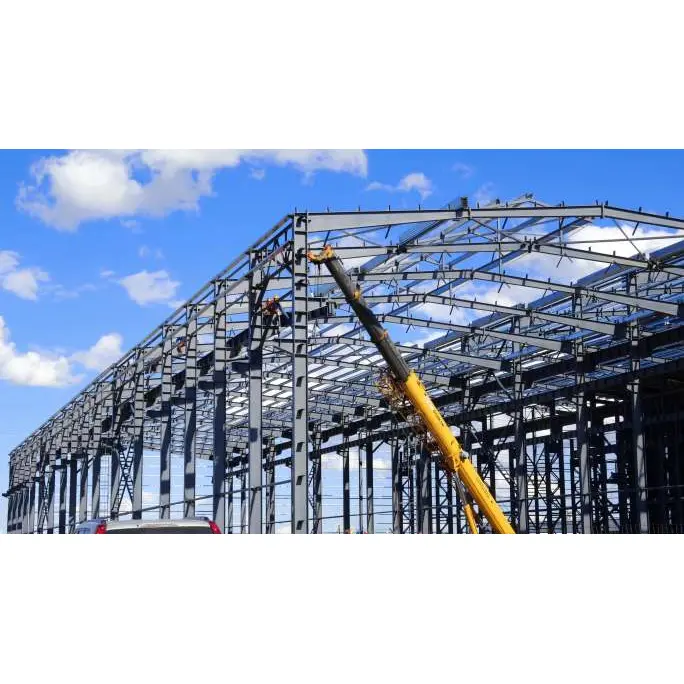
For solar tracking projects, structural materials are an essential part of long-term system performance. The support structure must combine sufficient mechanical strength with dimensional stability, corrosion resistance, manufacturing consistency, and compatibility with the installation environment.

Guojian Steel (Tianjin) Co., Ltd. can be considered as a steel-related supply partner when solar tracker manufacturers and project integrators evaluate structural material requirements. For tracker applications, material selection should be coordinated with the final structural design, loading conditions, surface treatment requirements, connection method, and expected service environment.

For international PV projects, consistency in material specifications and production quality is particularly important because tracker structures may contain numerous interconnected components. Proper material documentation and quality control can support more predictable fabrication and installation.


Frequently Asked Questions

What is a tilted single-axis solar tracker?

A tilted single-axis solar tracker is a photovoltaic mounting system that rotates PV modules around one axis that is inclined relative to the horizontal ground. The system follows the sun using one rotational degree of freedom.

How does a tilted tracker differ from a fixed solar mounting system?

A fixed mounting system keeps the modules in one orientation, while a tilted tracker changes the module angle during operation. This movement can increase solar energy collection under suitable site and weather conditions.

Can a tilted single-axis tracker work on sloped terrain?

It can be engineered for certain sloped or complex sites, but suitability depends on terrain geometry, foundation conditions, tracker design, row arrangement, and structural loading. A site-specific engineering assessment is necessary.

Does a single-axis tracker always produce more energy?

Tracking can increase energy collection compared with a fixed system, but the actual improvement depends on location, solar radiation, weather, tracker geometry, shading, control strategy, and system availability. Published experimental and simulation studies demonstrate gains under specific conditions rather than one universal percentage. :contentReference[oaicite:5]{index=5}

Why is the axis tilted?

An inclined axis changes the geometry of the array's movement and can provide a more suitable tracking trajectory for certain locations and project configurations. Axis inclination should be determined through solar geometry and engineering analysis.

What are the main components of the system?

The main components normally include the structural support, inclined rotation axis, bearings, drive motor, gearbox or slewing mechanism, controller, position feedback system, foundation, wiring, and safety mechanisms.

Does the system require maintenance?

Yes. Because the system contains moving mechanical components, regular inspection of drives, bearings, fasteners, structural connections, electrical equipment, control systems, and protective functions is recommended.

Is a tilted single-axis tracker suitable for every solar project?

No. Project suitability depends on solar resource, latitude, terrain, wind conditions, land configuration, structural requirements, installation costs, maintenance capabilities, and expected energy yield. A project-specific assessment should be completed before selecting the system.


Conclusion

A Tilted Single-Axis Solar Tracker System provides a practical approach to increasing the dynamic solar exposure of photovoltaic modules while retaining a single rotational mechanism. Its inclined axis introduces additional flexibility in system geometry and can be advantageous for selected locations and terrain conditions.

The value of the technology, however, does not come from tracking movement alone. Successful projects require coordinated decisions covering solar geometry, structural strength, foundation engineering, drive technology, control algorithms, shading management, wind protection, material quality, installation accuracy, and long-term maintenance.

For developers and engineering teams, the most effective approach is to evaluate the entire system against the actual site rather than relying on a generic energy-gain figure. With appropriate engineering and high-quality structural materials, single-axis tracking can become an important part of a reliable and productive photovoltaic installation.


Build a Reliable Solar Tracker Structure for Your Next PV Project

Choosing the right structural materials is an important step toward building a durable photovoltaic tracking system. If you are developing a solar tracker project and need reliable steel materials or want to discuss project-specific structural requirements, contact us at Guojian Steel (Tianjin) Co., Ltd. to discuss your application, material specifications, and supply requirements.

Related News
Leave me a message
X
We use cookies to offer you a better browsing experience, analyze site traffic and personalize content. By using this site, you agree to our use of cookies. Privacy Policy
RejectAccept